Long-haul flights open the door to incredible destinations, but spending eight, ten, or even fifteen hours on an aircraft can leave you feeling stiff, tired, and uncomfortable before your holiday has even begun.
Limited legroom, prolonged sitting, dry cabin air, and disrupted sleep can all make flying physically demanding. Fortunately, a little preparation and a few simple habits can make the journey more manageable.
Whether you’re flying across the Atlantic, heading to Asia, or preparing for a lengthy connecting journey, these seven practical tips can help you arrive feeling more comfortable and ready to explore.
1. Choose Comfortable Clothing for Your Flight
What you wear can make a surprising difference when you’re sitting for several hours.
Tight waistbands, restrictive trousers, and uncomfortable footwear may feel perfectly fine during a short journey but become irritating on longer flights.
Consider wearing breathable clothing that allows you to move freely. Soft trousers, comfortable tops, and lightweight layers are particularly useful.
Cabin temperatures can fluctuate throughout the journey, so having a jumper or cardigan within reach is a good idea.
Footwear matters too. Choose shoes that are comfortable, easy to remove if necessary, and suitable for walking through large airports.
Remember that some people experience temporary foot or ankle swelling during lengthy periods of sitting, making particularly tight shoes uncomfortable.
2. Keep Your Legs Moving Throughout the Journey
One of the simplest ways to make a long flight more comfortable is to avoid remaining completely still for extended periods.
When you sit for several hours, your legs have limited opportunities for movement. This can contribute to stiffness and temporary swelling.
Try incorporating small movements into your journey:
- Gently raise and lower your heels while keeping your toes on the floor.
- Lift your toes while keeping your heels planted.
- Slowly bend and straighten your ankles.
- Change your sitting position periodically.
- Walk along the aisle occasionally when it is safe to do so.
These movements require little space and can usually be performed without disturbing neighbouring passengers.
The Centers for Disease Control and Prevention also recommends regular movement and calf muscle exercises during long-distance travel because prolonged immobility is associated with an increased risk of blood clots.
You can find further information in the CDC’s guidance on deep vein thrombosis and long-distance travel.
3. Consider Whether Compression Socks Are Appropriate
Long flights can sometimes leave travellers with swollen ankles or a heavy sensation in their legs.
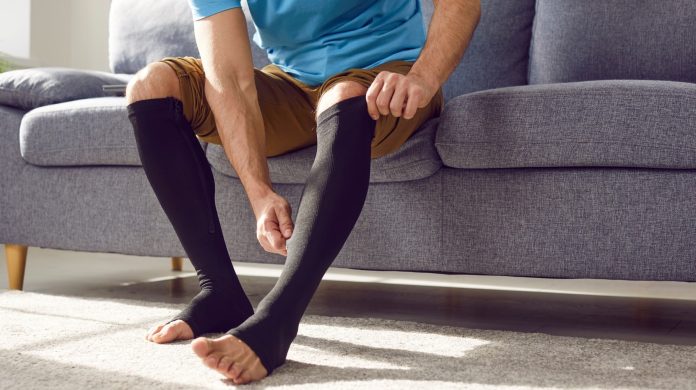
Graduated compression socks apply controlled pressure to the lower legs, with the greatest compression typically occurring around the ankle.
They may be particularly useful for certain travellers who have an increased risk of developing blood clots during prolonged journeys.
However, compression stockings aren’t necessary for everyone, and the appropriate type and compression level depend on individual circumstances.
Travellers with a history of blood clots, recent surgery, certain medical conditions, or other risk factors should consult a healthcare professional before travelling.
Correct sizing is also important. Compression socks that are too tight, poorly fitted, or unsuitable for an individual’s circulation may cause problems rather than provide the intended support.
For travellers exploring their options, understanding the importance of choosing appropriately fitted compression socks can be a useful starting point.
Remember that compression socks are not a substitute for regular movement or personalised medical advice.
4. Stay Hydrated Without Overdoing It
Air travel often disrupts normal routines, including when and how much water we drink.
Between airport queues, boarding announcements, meals, and sleeping, it’s surprisingly easy to forget about hydration.
Bring an empty reusable water bottle through security and fill it before boarding, where airport facilities allow.
During the journey, drink water regularly according to your needs rather than waiting until you’re noticeably thirsty.
There’s no need to force yourself to drink excessive quantities.
It’s also important to distinguish between general comfort and medical prevention. While staying adequately hydrated is sensible, research has not established that drinking extra water prevents travel-related blood clots.
If you enjoy coffee or tea, there’s usually no reason to avoid them entirely. However, consider how caffeine affects your sleep, particularly if you’re planning to rest during the flight.
5. Pay Attention to Your Sitting Position
Airline seats aren’t designed to accommodate every body shape equally, and maintaining the same position for hours can make your back, neck, and shoulders uncomfortable.
Small adjustments may help.
Try sitting with your lower back supported and your feet resting comfortably on the floor whenever possible.
If the seat doesn’t provide enough lumbar support, a small cushion or rolled-up jumper may make sitting more comfortable.
Avoid remaining in an awkward position simply because you have finally managed to fall asleep.
Neck pillows can also be useful, although their effectiveness depends on personal preference and how well they support your head.
If you’re travelling with a laptop, try to avoid spending the entire flight leaning forward over the screen.
Take regular breaks from reading, working, or watching films to change your position.
6. Make Sleep and Rest Part of Your Travel Plan
Getting quality sleep on an aircraft isn’t always easy.
Cabin announcements, neighbouring passengers, changing light conditions, and uncomfortable seating can make uninterrupted rest difficult.
Still, a few thoughtful preparations can improve your chances of getting some sleep.
Consider packing an eye mask, earplugs, or noise-cancelling headphones.
A lightweight travel pillow may also help support your head, particularly if you’re sitting upright.
For overnight flights, try adjusting your routine towards the local time at your destination.
For example, if you’re arriving early in the morning, sleeping during part of the flight may help you feel more prepared for the day ahead.
Avoid putting too much pressure on yourself to sleep perfectly.
Even a period of quiet rest can make a lengthy journey feel more manageable.
7. Give Yourself Time to Recover After Landing
The journey doesn’t end when the aircraft reaches the gate.
After several hours of sitting, your body may appreciate some gentle movement before another long period in a taxi, train, or airport lounge.
If your schedule allows, spend a little time walking around the terminal.
Once you reach your accommodation, consider taking a short walk, moving your ankles and shoulders, or doing some gentle stretching.
You don’t need an intensive workout immediately after landing.
In fact, following a lengthy overnight flight, rest and gradually returning to your normal activity level may be more appropriate.
If you’re heading straight into an active holiday involving hiking, sightseeing, or other physical activities, consider allowing some flexibility in your first day’s schedule.
A relaxed start can make the transition from travelling to exploring much more enjoyable.
When Should Travellers Seek Medical Advice?
Most discomfort associated with long flights is temporary, but some symptoms should not be ignored.
New swelling, pain, warmth, or unusual tenderness in one leg may indicate a problem that requires prompt medical assessment.
Sudden shortness of breath, chest pain, fainting, or coughing up blood may be signs of a pulmonary embolism and require immediate emergency medical attention.
Travellers with known risk factors for blood clots should discuss prevention strategies with their healthcare professional before departure rather than relying on general travel advice.
Final Thoughts
Long-haul flights don’t have to leave you completely exhausted.
Comfortable clothing, regular movement, appropriate seating support, sensible hydration, and thoughtful rest can all contribute to a more pleasant journey.
The most effective approach is often a combination of small adjustments rather than one particular travel accessory or technique.
Before your next international adventure, take a little time to prepare for the physical demands of flying.
After all, the journey is part of the travel experience, and arriving comfortably can help you make the most of everything your destination has to offer.