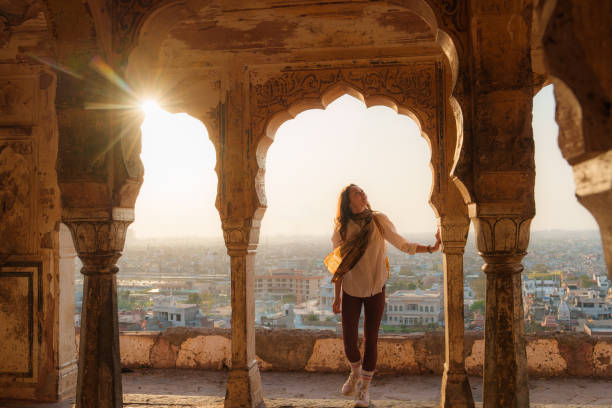
There is a very specific kind of nervousness that comes before your first solo trip. It’s not quite fear — it’s the electric uncertainty of doing something for the very first time without a safety net. And then you step off the train in a new city, navigate your way to your guesthouse using nothing but your phone and street signs, eat your first solo meal, and realise you’re fine. Better than fine. You’re thriving.
India for a first-time solo traveller is intense, overwhelming, and completely transformative. Here’s how to set yourself up for success.
Start with the Right City
Not all Indian cities are equally accessible for first-time solo travellers. The best starting points are cities with good tourist infrastructure, manageable size, and a clear main tourist area:
Jaipur (Rajasthan): Well-organised, with a clear heritage circuit (Amer Fort, City Palace, Hawa Mahal), affordable accommodation, good transport connections, and a tourist police force that’s genuinely responsive. A perfect introduction to North India.
Kochi (Kerala): One of India’s most manageable cities. Fort Kochi’s heritage district is compact and walkable, the backwater daytrips are easy to arrange, and the food is exceptional. A gentler entry point for those who find North India’s density overwhelming.
Mysuru (Karnataka): Clean, organised, royal heritage everywhere, excellent street food, and a city that moves at a pace that allows you to actually breathe. The Mysuru Palace is one of India’s most spectacular buildings.
Pre-Departure Planning
Book your first two nights in advance. After that, you can decide as you go. But arriving in a new city without accommodation sorted is unnecessary stress.
Download essential apps before you leave: Google Maps (download offline maps for your destinations), MakeMyTrip or IRCTC for transport, Ola/Uber for city transport, Google Translate (download Indian language packs offline), and Zomato for food finding.
Get your IRCTC account set up before you travel. Registration can take a few days due to phone number verification. IRCTC is essential for booking train tickets.
Carry a physical copy of your important documents — passport/ID, e-tickets, hotel addresses. Phones die at inconvenient moments.
Money: How Much Do You Need?
Daily budget in India varies dramatically by style:
Budget travel: ₹1,200-1,800/day covers a dorm bed or cheap guesthouse, street food and basic restaurants, local transport, and entrance fees to most sites.
Mid-range: ₹2,500-4,000/day gets you a comfortable private room, sit-down restaurants, and occasional Ola/Uber rides.
Carry cash. India is increasingly digital, but many temples, rural transport, street food vendors, and smaller guesthouses are cash-only. ATMs are widely available in cities but can be unreliable at remote sites — withdraw before you go.
Transport Basics
Trains are your backbone. Long-distance travel by train is safe, affordable, and genuinely interesting. Book in advance using IRCTC (confirmed tickets are now required for Sleeper/AC travel following the May 2025 rule change). For your first overnight train, choose AC-3 Tier — comfortable, secure, and the berths fold down properly.
Within cities: Metro systems in Delhi, Mumbai, Bengaluru, Hyderabad, Chennai, and Kolkata are excellent. Use Ola/Uber for airport transfers and late-night travel. Auto-rickshaws for short daytime trips — always agree on the fare before getting in or insist on meter.
Buses: For hill stations and routes not served by trains, state buses are reliable and cheap. Private ‘sleeper buses’ for overnight trips offer reasonable comfort.
Your First Week: Suggested Solo Itinerary
Day 1-3: Arrive in Jaipur. Explore Amer Fort on Day 1. City Palace and Hawa Mahal on Day 2. Day trip to Pushkar on Day 3 (1.5 hours by bus).
Day 4-5: Train to Agra (2.5 hours). Taj Mahal at sunrise Day 4. Agra Fort and Fatehpur Sikri Day 5.
Day 6-7: Overnight train to Varanasi. Morning boat ride on the Ganga. Evening Ganga Aarti at Dashashwamedh Ghat.
This is a classic circuit that’s well-trodden for good reason — the logistics are straightforward, the sights are extraordinary, and each city is different enough to maintain genuine interest.
The Social Side of Solo Travel
Staying in hostels, particularly Zostel or Moustache properties, is the fastest way to meet other travellers. Common areas, group activities, and the shared experience of being new somewhere create friendships quickly.
Cooking classes, walking tours, and yoga retreats are excellent solo activity options — structured enough to be approachable alone, social enough to create connection.
Don’t resist the social aspect, but don’t feel obliged either. Some of the best solo travel days are when you disappear into a city entirely by yourself and emerge hours later having found something extraordinary that was entirely yours.
Final Word for First-Timers
India will overwhelm you, probably within the first 30 minutes. That’s not a problem — it’s part of the experience. The overwhelming quality of India is also the quality that makes it so impossibly alive. Take the chaos slowly, one thing at a time, and you’ll find that it starts to make a very specific kind of sense.