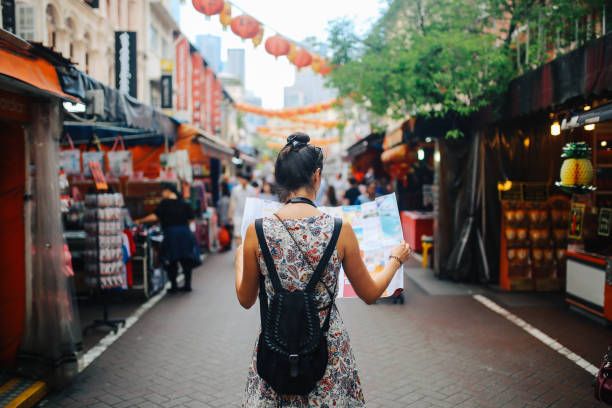
The question gets asked constantly, and the answer — which nobody loves — is: it depends.
It depends on where you’re going, how you travel, what kind of risks you’re willing to manage, and, honestly, how much prior solo travel experience you have. The question itself sometimes gets treated as either “of course it’s safe, women travel everywhere!” or “no, the world is too dangerous, don’t do it” — and both of those answers miss the point.
The real answer is more nuanced, more honest, and ultimately more useful. Here it is.
First: Let’s Be Honest About the Risks
Yes, solo female travelers do face specific risks that their male counterparts don’t face in the same way. Harassment — ranging from annoying to genuinely threatening — is more common for women traveling alone in certain destinations. Petty crime sometimes targets solo female travelers. In some parts of the world, women traveling without male companions attract unwanted attention or are treated differently by locals.
Pretending these risks don’t exist isn’t empowering. It’s just inaccurate, and it leaves travelers unprepared.
The good news is that the vast majority of these risks are manageable with the right preparation, awareness, and decision-making. Millions of women travel alone every year and have incredibly positive, safe experiences. The goal isn’t to avoid all risk — the goal is to understand it and manage it intelligently.
The Safest Destinations for Solo Female Travelers
Some destinations are consistently rated among the safest and most enjoyable for women traveling alone. These tend to share certain characteristics: low violent crime rates, respectful treatment of women in public spaces, good transport infrastructure, and an established community of solo female travelers.
Japan is frequently cited as one of the safest countries in the world for solo female travelers. The culture is respectful, crime rates are extremely low, public transport is excellent, and even wandering alone late at night in most cities feels genuinely safe.
Iceland has the highest gender equality rating in the world (World Economic Forum, 2025) and is by extension one of the most comfortable countries for women traveling alone. Violent crime is virtually nonexistent.
New Zealand combines low crime rates with excellent tourist infrastructure and a laid-back, egalitarian culture.
Portugal — particularly Lisbon and Porto — is consistently praised by solo female travelers for being welcoming, safe, and easy to navigate.
Canada offers enormous variety — mountains, coastlines, cities — with a culture that is safe and broadly respectful.
Thailand has a well-established solo female travel community, though it requires more awareness than the above destinations — particularly in certain areas and at certain times of night.
Colombia has transformed dramatically in terms of safety over the past fifteen years, and cities like Medellín and Cartagena are genuinely enjoyable for solo female travelers who take sensible precautions.
Destinations That Require Extra Preparation
Some destinations are rewarding but require additional research and precaution for solo female travelers:
India offers extraordinary experiences but also presents higher rates of harassment in some regions, particularly for Western women traveling alone. Major tourist destinations are manageable with good preparation — solo female travelers successfully navigate Rajasthan, Kerala, Himachal Pradesh, and other regions regularly. But it’s not a destination to arrive unprepared.
Egypt and Morocco are similarly complex — culturally rich and fascinating, with challenges around street harassment in certain areas that require mental preparation and practical strategies.
Parts of Southeast Asia (particularly certain areas of Cambodia, Indonesia, and the Philippines) require standard nighttime precautions and good judgment in bars and tourist areas.
None of these destinations should be automatically avoided. But “extra preparation” is worth taking seriously — research specific areas, read recent accounts from female travelers on platforms like Solo Female Travelers (Facebook group), and know what to expect before you arrive.
Practical Safety Tips That Actually Work
Research your specific destination in depth. Not just general travel safety information — specific accounts from women who’ve recently been there. The Solo Female Travelers Facebook group, Lonely Planet’s Thorn Tree forum, and Reddit’s r/solotravel are all excellent resources for current, ground-level information.
Book accommodation in safe areas. Your first night especially, stay somewhere well-reviewed, centrally located, and easy to navigate from the airport or train station at whatever time you arrive. Read recent reviews specifically from solo female travelers.
Dress according to local norms. This isn’t about victim-blaming — it’s about practical risk management. In more conservative countries, dressing in a way that respects local culture significantly reduces unwanted attention. Carry a light scarf for covering your shoulders or head when entering religious sites or conservative areas.
Use licensed transport. Pre-book airport transfers or use official taxi ranks. Ride-hailing apps (Grab in Southeast Asia, Uber or local equivalents elsewhere) are generally safer than random taxis because your trip is tracked.
Be careful about alcohol. This applies to all travelers, but particularly solo female travelers. Know your limits and keep a close eye on your drink.
Share your itinerary with someone at home. And check in regularly. A quick message every day or two (“made it to X, fine”) takes thirty seconds and matters.
Trust your gut. If a situation feels off, leave it. If someone is giving you a bad feeling, create distance without worrying about seeming rude. Your instincts are usually picking up on something real.
Have a fake phone call ready. If you’re being followed or feel uncomfortable on a street, fake receiving a phone call, speak loudly and confidently, and walk toward other people or into a shop. It works.
How to Handle Harassment If It Happens
Some level of unwanted attention is an unfortunate reality for solo female travelers in some destinations. Having a strategy for it reduces its impact significantly.
Ignore and walk away is often the most effective response to verbal harassment. Engaging, even to tell someone to leave you alone, often escalates rather than ends the interaction.
Be firm and direct if you need to respond. A clear, confident “No” or “Stop” — not polite, not apologetic — usually works better than anything more elaborate.
Create physical distance. Walk toward other people, into a shop, onto a well-lit street.
Report serious incidents to local police and, if relevant, to your country’s embassy.
The Bottom Line
Is it safe to travel alone as a woman? For most destinations, with good preparation and common-sense precautions, yes. The world is genuinely not as dangerous as it can sometimes be made to seem. Millions of women travel alone every year and come home with experiences that changed their lives for the better.
The goal is not to travel without any risk — that doesn’t exist for anyone. The goal is to travel with open eyes, proper preparation, and the knowledge that you can handle whatever comes your way.
Because you can.