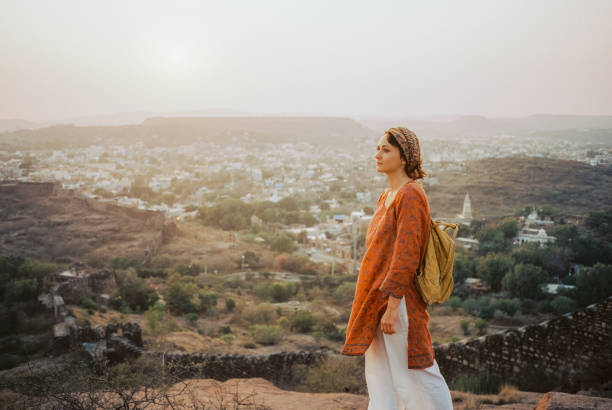
There’s a peculiar kind of exhaustion that comes from ticking off too many destinations too quickly. You’ve seen the photos, stood at the viewpoint, checked the temple — and yet somehow you feel like you missed the whole thing. That feeling has a name: travel burnout. And slow travel is the antidote.
Slow travel isn’t about travelling slowly in the literal sense. It’s about going deeper into fewer places rather than wider across many. It’s about actually living in a location, even briefly, rather than just visiting it. And India, with its staggering diversity of culture, food, landscape, and community, is possibly the best country in the world for this approach.
What Slow Travel Actually Means
In practice, slow travel means staying in one place for longer. Instead of a 10-day trip across five cities, you spend a week in one city, one town, one village. You eat at the same dal baati place three mornings in a row because the uncle who runs it has interesting things to say. You learn five words in the local language. You attend the weekly market. You take the local bus even when a private car would be faster.
You stop being a tourist and start being a temporary local. This shift is subtle but it changes everything about how you experience a place.
Where to Practice Slow Travel in India
Hampi, Karnataka: The ruined kingdom of Vijayanagara is sprawling enough to justify 5-7 days. Rent a bicycle and spend mornings exploring lesser-visited temples, afternoons swimming in the Tungabhadra River, and evenings watching the sunset from Matanga Hill. The backpacker village of Virupapur Gaddi, across the river, has the relaxed energy of a place that hasn’t fully decided whether it’s 1995 or 2025.
Varanasi, Uttar Pradesh: The most intense slow travel destination in India. Varanasi rewards those who stay long enough to understand its rhythms. The ghats at dawn (arrive by 5 AM for the rowing boats). The narrow alleys of the old city. The evening Ganga Aarti at Dashashwamedh Ghat. A weaving workshop visit. A classical music concert in a rooftop café. Give it five days minimum. Ten is better.
Spiti Valley, Himachal Pradesh: For those who want complete isolation. The cold desert landscape, ancient monasteries, and small village communities of Spiti have a quality of stillness that’s increasingly rare. Key Monastery, Langza village (with its fossil-filled landscape), and the Buddhist festivals — all of these need time to absorb. Best visited June to September.
Pondicherry: The French Quarter, the Auroville experiment, Tamil temple culture, excellent coffee, and some of India’s best colonial architecture — all in a compact town that rewards a week of unhurried exploration. Staying in a heritage guesthouse in the White Town and cycling to the beach each morning is a genuinely lovely way to spend five days.
How to Travel Slowly in India: Practical Tips
Book accommodation by the week, not the night. Weekly rates are almost always better, and having a base makes everything more relaxed.
Cook occasionally. Markets in most Indian towns sell fresh produce that’s extraordinary in quality and extremely affordable. Even one home-cooked meal during your stay connects you to local food culture in a way that restaurant meals rarely do.
Use public transport. Buses, local trains, shared autos — the best conversations happen here. You’ll meet people you would never have encountered in a private car.
Make a neighbour. This sounds vague, but in India, it rarely takes long. A shopkeeper, a dhaba owner, a fellow guesthouse guest. Slow travel creates the time for these connections to form.
Leave your itinerary loose. If something interests you, follow it. The best experiences on any Indian trip are rarely on the original plan.
The Financial Logic of Slow Travel
Slow travel is often cheaper than rushing. The transaction costs of travel — transport between cities, booking fees, expensive tourist-area restaurants — add up quickly. When you stay in one place for longer, you find the affordable local restaurants, the off-the-tourist-trail accommodation, the market rather than the souvenir shop. You also spend less mental energy on logistics, which is its own kind of expensive.
A Different Kind of Souvenir
After a slow travel trip, you don’t come home with a suitcase full of refrigerator magnets. You come home with a mental map of a neighbourhood, a recipe you asked someone to write down for you, a few friendships that survive on WhatsApp for years, and the particular quality of light in that place at a specific hour of day that you’ll remember for the rest of your life.
That, more than any place you’ve rushed through, is what stays.