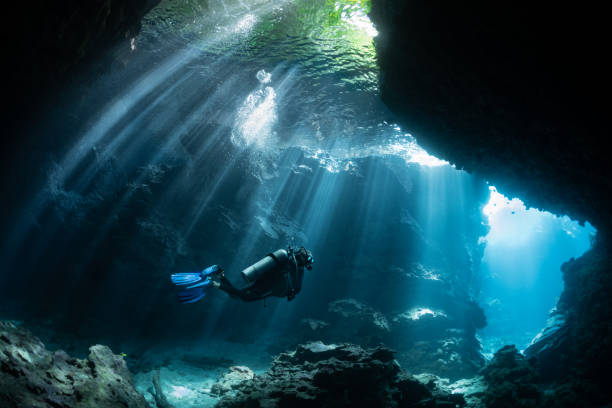
This is probably the most common question beginner divers ask, and understandably so. The idea of being underwater, breathing through a regulator, while not being a strong swimmer can sound contradictory — even dangerous. So let’s settle this properly: No, you do not need to be a swimmer to try scuba diving. But there are some important nuances here that every beginner should understand before they jump in.
I’ll share what actually happens, what skills you genuinely need, and why this question — though valid — sometimes misses the bigger picture.
The Short Answer
For a beginner try-dive or a Discover Scuba Diving (DSD) session, you do not need swimming ability. You will be accompanied by a certified instructor at all times, in shallow water, and your buoyancy will be controlled mostly by your equipment. The life vest (BCD — Buoyancy Control Device) keeps you stable. You’re not swimming; you’re floating and gliding.
However, if you want to get a full PADI Open Water Diver certification — the internationally recognized qualification that lets you dive independently — you will need to demonstrate basic swimming competence. Specifically, you’ll need to swim 200 metres without stopping (or 300 metres with a mask, fins, and snorkel), and tread water or float for 10 minutes.
Why Swimming Matters in Scuba — But Not in the Way You Think
Here’s the thing that most articles get wrong: scuba diving doesn’t actually require you to be a good swimmer in the traditional sense. You’re not doing freestyle laps underwater. Your fins do the propulsion. Your BCD manages your depth. You’re essentially weightless.
What swimming ability actually gives you is water confidence. That calm, unhurried feeling of being surrounded by water without panicking. That’s what instructors are really looking for. A nervous, thrashing beginner is far more difficult to manage underwater than someone who moves slowly and breathes calmly — even if the latter is a mediocre swimmer.
So the more accurate question is: are you comfortable in water? Can you put your face in and breathe slowly? Can you stay calm if water unexpectedly enters your mask? Those are the real prerequisites.
What Happens During a Discover Scuba Diving Session
A DSD is designed specifically for people who’ve never dived before, including non-swimmers. Here’s what typically happens:
You start in a swimming pool or very shallow water — usually 1.5 to 3 metres deep. Your instructor introduces you to the equipment, shows you how to breathe through the regulator, and teaches you a handful of basic hand signals.
You practice clearing your mask (if water gets in), equalising the pressure in your ears, and how to ascend safely. None of this requires swimming skill.
Then you enter the ocean (at beginner-friendly dive sites) and explore for 20-30 minutes at depths of 5-10 metres, with your instructor right beside you the whole time.
Most people come back up beaming. The underwater world — even at shallow depths — is genuinely breathtaking.
The Best Scuba Diving Spots in India for Beginners
If you’re planning your first dive in India, these locations are beginner-friendly and widely trusted:
Andaman and Nicobar Islands (Havelock Island / Radhanagar Beach): India’s premier diving destination. Crystal clear water, visibility up to 20 metres, vibrant coral reefs, and professional PADI-certified operators. Best time: October to May.
Goa: Ideal for quick weekend dives. Several wrecks and reef sites near Grand Island. Water visibility is moderate but diving is very accessible. Multiple dive centres on Baga and Calangute beach areas.
Lakshadweep: Stunning remote archipelago with pristine coral reefs and abundant marine life. Limited tourist infrastructure means it’s less crowded. Permits required — plan in advance.
Pondicherry: Surprisingly good diving, with warm waters, interesting wreck sites, and some of the most affordable dive courses in India. Great for getting certified.
Netrani Island, Karnataka: Also called Pigeon Island. Excellent visibility, whale sharks have been spotted here, and the boat ride from Murudeshwar is an experience in itself.
Tips for Non-Swimmers Planning Their First Dive
Be honest with your instructor about your swimming ability. They are not there to judge you — they’re there to make your experience safe and wonderful.
Practice breathing through a snorkel in a pool before your dive. This desensitises you to the unusual sensation of breathing through a mouthpiece in water.
Don’t fight the water. The biggest mistake beginners make is tensing up and thrashing. Slow, deep breaths. Let the equipment do the work.
If you feel uncomfortable at any point during the dive, signal your instructor with a thumbs-up (which in diving means ‘I want to ascend’, not ‘I’m fine’). They will surface with you immediately.
Equalise your ears frequently. Pain or pressure in your ears means you need to equalise by pinching your nose and gently blowing. Don’t push through the pain — ascend slightly and try again.
Thinking About Getting Certified?
If after your try-dive you’re hooked (and most people are), getting a PADI Open Water certification is the logical next step. This requires about 3-4 days of learning — theory, pool sessions, and open water dives. The swimming requirement here is modest: 200 metres at your own pace, and 10 minutes of floating. Most recreational swimmers can manage this easily.
With an Open Water certification, you can dive to 18 metres at any dive centre in the world. It’s one of the most versatile qualifications a traveller can have.
Final Word
You don’t need to be an Olympic swimmer to experience the underwater world. What you need is curiosity, a willingness to breathe slowly, and a good instructor. Millions of people who can barely swim have had life-changing dive experiences. The ocean doesn’t care about your freestyle technique. It just asks that you come quietly, breathe, and look.